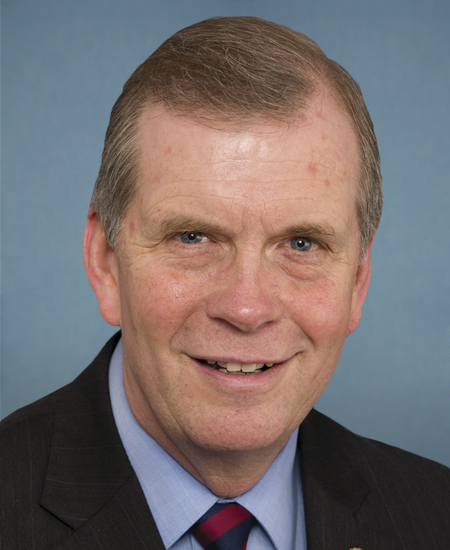
U.S. Representative for Michigan’s 5th District
Tim Walberg
From public records: votes from Voteview, bills from congress.gov, money from FEC filings · votes updated Nov 2, 2026 · How we measure
Position · +0.50
- In office
- House 2007–now
17 years in CongressMore senior than 85% of the House - Committees
- Education and Workforce Chair
- Natural Resources 17th majority
- Age
- 75
2026 election
Running for re-election
General election Nov 3, 2026
Also running
Counts, not a score: statements as the Statements tab counts them, bills by introduction date, roll calls the member voted in, breaks on party-line votes.
StatementsBills
Words go to Government Operations and Politics, Crime and Law Enforcement and Education; bills go to Education and Armed Forces and National Security.
- He talks most about: Education Funding (Education), Government Spending (Government Operations and Politics), Workforce Development (Labor and Employment), Fraud Enforcement (Crime and Law Enforcement), Cost of Living (Taxation).
- 28 bills sponsored, most on Education.
Chair of the Education and Workforce Committee, more senior than 85% of the House, in the majority.
- 17 years in Congress: more senior than 85% of the House.
- Majority: Republicans and the independents who caucus with them hold 219 of the 433 filled seats.
His cosponsorships on Democratic bills
Closest within his party
Closest across the aisle
Closest across the aisle Pro The members of the other party who vote most like Walberg.
Free account See ProAgreement on contested votes where both cast yea or nay, this Congress · Voteview
8% of his cosponsorships go to Democratic bills (peer median 13%); closest in his party: Johnson and Latta.
- Other-party share of cosponsors on his own bills: not yet tracked.
- Caucus memberships: not yet tracked.
His billsExpected for a peer
2.66expected 1.16 · average member 1.00
3 of 24 bills passed the House; 1 became law; effectiveness 2.66 against a peer median of 1.16.
- On the move: H.R. 8195 (out of committee), H.R. 4307 (became law), H.R. 5505 (out of committee).
- Amendments offered and adopted, earmarks in dollars: not yet tracked.
119th Congress so far · bills from congress.gov
With his party on all 12 areas with 10 or more party-line votes so far.
Major bills of the Congress · final passage
- H.R. 1 One Big Beautiful Bill Act May 22, 2025 YEA R 215–2
- H.R. 5371 Continuing Appropriations, Agriculture, Legislative Branch, Military Construction and Veterans Affairs, and Extensions Act, 2026 Sep 19, 2025 YEA R 216–2
- H.R. 1968 Full-Year Continuing Appropriations and Extensions Act, 2025 Mar 11, 2025 YEA R 216–1
- H.R. 7148 Consolidated Appropriations Act, 2026 Jan 22, 2026 YEA R 192–24
- H.R. 4 Rescissions Act of 2025 Jun 12, 2025 YEA R 214–4
- S. 2 Secure America Act Jun 9, 2026 YEA R 214–1
- H.J.Res. 89 Providing congressional disapproval under chapter 8 of title 5, United States Code, of the rule submitted by the Environmental Protection Agency relating to "California State Motor Vehicle and Engine and Nonroad Engine Pollution Control Standards; The 'Omnibus' Low NOX Regulation; Waiver of Preemption; Notice of Decision". Apr 30, 2025 YEA R 215–1
- H.J.Res. 88 Providing congressional disapproval under chapter 8 of title 5, United States Code, of the rule submitted by the Environmental Protection Agency relating to "California State Motor Vehicle and Engine Pollution Control Standards; Advanced Clean Cars II; Waiver of Preemption; Notice of Decision". May 1, 2025 YEA R 211–0
- H.J.Res. 35 Providing for congressional disapproval under chapter 8 of title 5, United States Code, of the rule submitted by the Environmental Protection Agency relating to "Waste Emissions Charge for Petroleum and Natural Gas Systems: Procedures for Facilitating Compliance, Including Netting and Exemptions". Feb 26, 2025 YEA R 214–1
- H.J.Res. 87 Providing congressional disapproval under chapter 8 of title 5, United States Code, of the rule submitted by the Environmental Protection Agency relating to "California State Motor Vehicle and Engine Pollution Control Standards; Heavy-Duty Vehicle and Engine Emission Warranty and Maintenance Provisions; Advanced Clean Trucks; Zero Emission Airport Shuttle; Zero-Emission Power Train Certification; Waiver of Preemption; Notice of Decision". Apr 30, 2025 YEA R 218–1
Voted with his party on 10 of the 10 he voted on.
The same ten bills on every profile, chosen by a rule from the roll calls, statements and lobbying filings on file · Method · party column: Republicans yea–nay on that roll call.
Votes with Republicans on 98% of party-line votes, breaks 11 times (peer median 11).
- Position: +0.50, inside the Republican middle 80%.
- Most breaks by area: Economics and Public Finance 9 of 50.
Distance from party, not an ideology score · areas under 10 party-line votes not shown.
Where the money comes from, 2025–26
Small-dollar individualsLarge individualsPACs and other committeesTransfers and other
52% of what he raised came from individuals; 4% came in gifts of $200 or less (chamber median 7%).
$2.2M raised, 43% from PACs and other committees (chamber median 36%).
- Last general election for the seat (2024): won by 32.9 points.
81 PACs of the 150 that gave belong to organizations that lobbied on bills he faced a vote on, cosponsored or sponsored.
Top lobbying issues of the organizations behind the PACs that gave to him: Taxation, Budget/Appropriations and Labor Issues/Antitrust/Workplace.
- Norpac29% D
- Associated Builders and Contractors0% D
- CMS Energy37% D
What each PAC gave Pro Amounts, the full list and each organization’s lobbying are part of Pro.
Free account See ProParty split is the PAC’s giving to all federal candidates · FEC
What those organizations lobby on
113 bills
Walberg voted Yea on 69, Nay on 3, and sponsored or cosponsored 41 with no recorded vote.
Positions are being checked before they go public; this question fills in when they are.