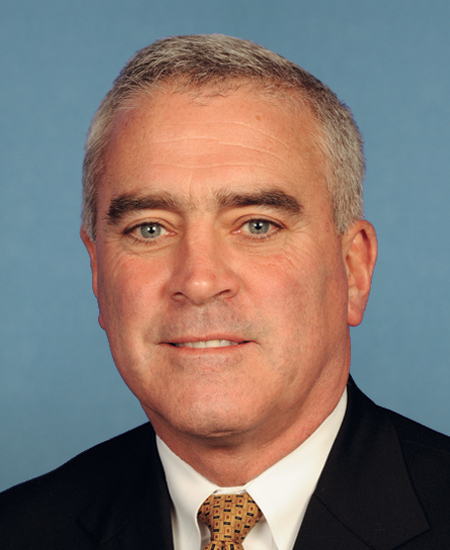
Former Representative for Ohio’s 2nd District, 2013–2025
Brad R. Wenstrup
Record from the 118th Congress · From public records: votes from Voteview, bills from congress.gov, money from FEC filings · votes updated Nov 2, 2026 · How we measure
Position · +0.53
- In office
- House 2013–2025
11 years in Congress
Left office. Wenstrup left the House on Jan 3, 2025, when the term ended. Succeeded by David J. Taylor (Republican) in January 2025.
Bottom line
- Moved bills further than peers in the 118th Congress: effectiveness 2.64 against 1.38 expected; 1 of their bills became law (1 national policy).
- Broke with Republicans most on Emergency Management in the 118th Congress: voted against them on 16% of party-line votes (3 of 19), against 0% for most Republicans.
Counts, not a score: statements as the Statements tab counts them, bills by introduction date, roll calls the member voted in, breaks on party-line votes.
StatementsBills
No counted statements yet; bills go to Health and Taxation.
- 35 bills sponsored, most on Health.
- Statements: our record starts in January 2025.
Committee seats are shown for sitting members only.
Committee and party posts are shown for sitting members only.
- 11 years in Congress.
His cosponsorships on Democratic bills
Closest within his party
Closest across the aisle
Closest across the aisle Pro The members of the other party who vote most like Wenstrup.
Free account See ProAgreement on contested votes where both cast yea or nay, in that Congress · Voteview
11% of his cosponsorships went to Democratic bills (peer median 10%); closest in his party: Stewart and Bentz.
- Other-party share of cosponsors on his own bills: not yet tracked.
- Caucus memberships: not yet tracked.
His billsExpected for a peer
2.64expected 1.05 · average member 1.00
5 of 32 bills passed the House; 1 became law; effectiveness 2.64 against a peer median of 1.05.
- On the move: H.R. 4818 (out of committee), H.R. 1691 (out of committee), H.R. 1432 (became law).
- Amendments offered and adopted, earmarks in dollars: not yet tracked.
118th Congress · bills from congress.gov
With his party on all 17 areas with 10 or more party-line votes.
Major bills of the Congress · final passage
- H.R. 4366 Consolidated Appropriations Act, 2024 Jul 27, 2023 YEA R 219–2
- H.R. 2670 National Defense Authorization Act for Fiscal Year 2024 Dec 14, 2023 YEA R 147–73
- H.R. 3746 Fiscal Responsibility Act of 2023 May 31, 2023 YEA R 149–71
- H.R. 3935 FAA Reauthorization Act of 2024 Jul 20, 2023 YEA R 187–31
- H.R. 5860 Continuing Appropriations Act, 2024 and Other Extensions Act Sep 30, 2023 YEA R 126–90
- H.R. 6363 Further Continuing Appropriations and Other Extensions Act, 2024 Nov 14, 2023 YEA R 127–93
- H.R. 9747 Continuing Appropriations and Extensions Act, 2025 Sep 25, 2024 YEA R 132–82
- H.J.Res. 7 Relating to a national emergency declared by the President on March 13, 2020. Feb 1, 2023 YEA R 218–0
- H.J.Res. 26 Disapproving the action of the District of Columbia Council in approving the Revised Criminal Code Act of 2022. Feb 9, 2023 YEA R 219–0
- H.R. 7888 Reforming Intelligence and Securing America Act Apr 12, 2024 YEA R 126–88
Voted with his party on 10 of the 10 he voted on.
The same ten bills on every profile, chosen by a rule from the roll calls, statements and lobbying filings on file · Method · party column: Republicans yea–nay on that roll call.
Voted with Republicans on 95% of party-line votes, broke 40 times (peer median 27).
- Position: +0.53, inside the Republican middle 80%.
- Most breaks by area: Economics and Public Finance 23 of 215, International Affairs 5 of 47, Transportation and Public Works 3 of 18.
Distance from party, not an ideology score · areas under 10 party-line votes not shown.
The money record for a former member is on the Money tab.
Positions are being checked before they go public; this question fills in when they are.